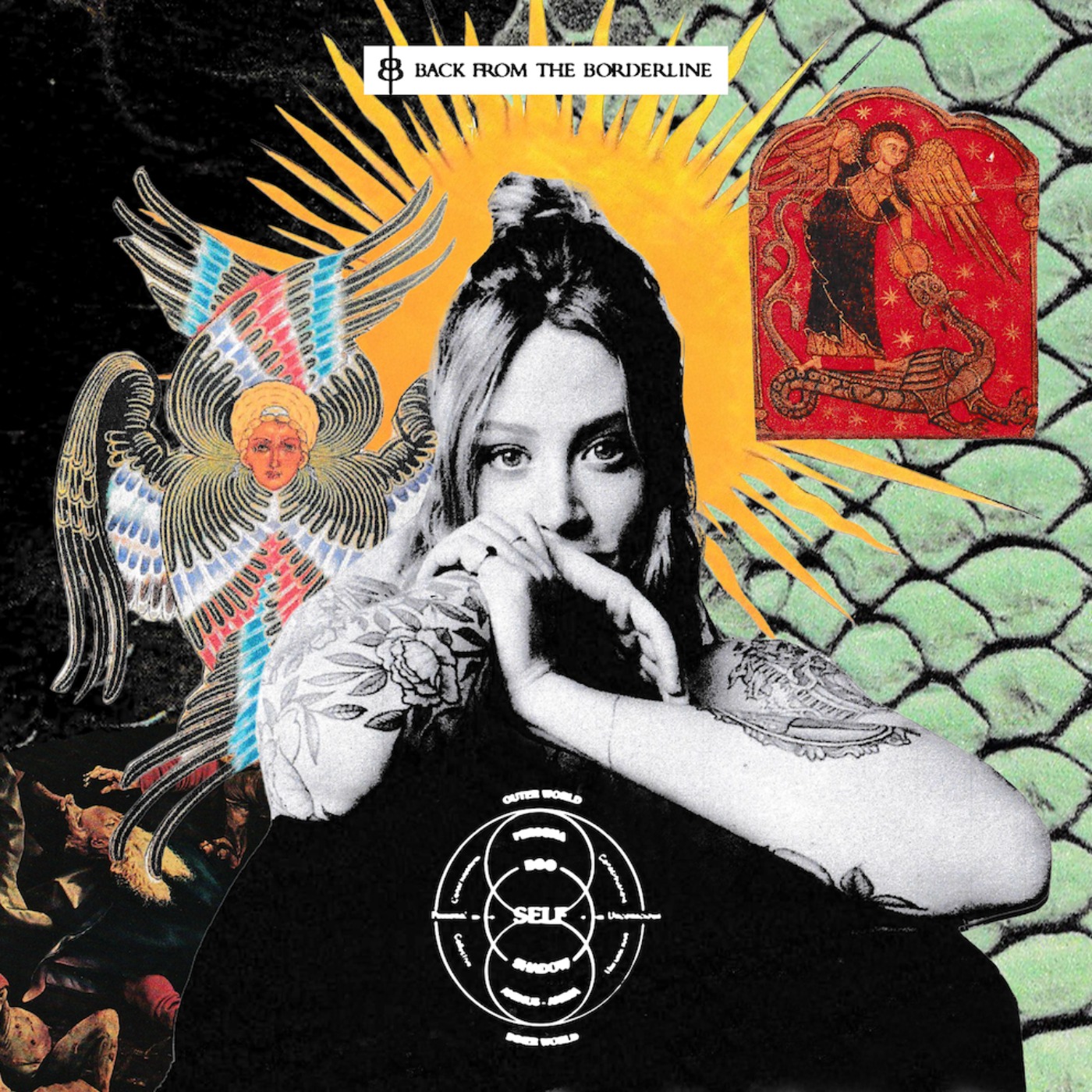
Delicious Dignity
You're spiritually intelligent, self-aware, resilient, discerning, have refined taste, and a massive capacity for depth. You're too smart for simple answers, too spiritual to dismiss the unseen, too disillusioned to go back to what didn't work, and too self-aware to pretend you have it figured out. Yet being this kind of woman can be profoundly lonely & wildly crazy making - because the world wasn't built for you and most spaces don't know what to do with you.
But you have figured one thing out ----- Your dignity is non-negotiable.
This podcast is for the woman who is rebuilding her dignity, strengthening it, & living from it. How do we strengthen our dignity in a world that seems bent on destroying it, profiting off the lack of it, & distorting it?
This show is hosted by Dilshad Mehta - intuitive coach with over a decade of experience, and one of the only Indian and Zoroastrian (Parsi) women podcasting anywhere in the world.
We cover the territory most spirituality podcasts avoid...which, as in turns out, are the topics that expand our dignity.
▪️The Feminine & Moving Away from Patriarchy
▪️Developing Strong Intuition
▪️ Addressing Self-Abandonment
▪️ Naming the Evil in the World
▪️ Spiritual Meaning & Mysticism of the Rose
▪️ Love as a Spiritual Practice & Cultivating More Love in Our Lives
▪️ Journaling Rituals for Clarity
▪️ Deep Embodiment of Dignity Through Body Based Rituals
All of this leads us to a Delicious kind of Dignity - a sense of self that we enjoy in ourselves.
Every episode offers practical guidance, ritual, and reflection to move you from knowing to living - with clarity, stability, and dignity.
▼
New episodes every 2 weeks on Sunday morning. Start anywhere!
I know you care about this so I'm going to say it loud & proud - all content in the episodes is original & human...with no AI, no ads, no repulsive sponsorships!
▼
Questions? Requests for Future Episodes? Want to say hi? Send me a text or voicemail! (your number is private & I cannot see it).
Delicious Dignity
Rose Mysticism 3: Unlocking the Power of the Prostitute Archetype
Use Left/Right to seek, Home/End to jump to start or end. Hold shift to jump forward or backward.
This third session of the Rose Podclass explores the spiritual meaning of the rose as a fierce ally for reclaiming dignity after self-betrayal and a guide back to sacred integrity. hrough the lens of the prostitute archetype, we examine how and why we compromise our dignity, truth, or soul in exchange for safety, validation, or survival. This is about the tender power of coming back to ourselves without force—through presence, not performance.
Here's what we explore:
- What archetypes are and how the prostitute archetype lives inside every human psyche
- Signs & examples of self-abandonment and energetic violation—and how they lead to self-loathing
- The benefits of working with this archetype - soul retrieval, grit, & standing strong in the face of evil
- The Bluebeard myth and why ignoring instinct leads to psychic danger
- Courageous self-inquiry questions and embodiment rituals that restore integrity, power, and dignity
▼
📖 Ritual Accompaniment For This Episode
▼
Reference Episodes:
- Episode 27 - Rose Mysticism 3: Unlocking the Power of the Prostitute Archetype
- Episode 21 - Rose Mysticism 2 - Reclaiming Your Sensual Divinity
- Episode 14 - Rose Mysticism 1 – Practicing Heaven on Earth
▼
🌹 Questions? Requests for Future Episodes? Want to say hi? Send me a text or voicemail! (your number is private & I cannot see it).
▼
🌹 Please rate and/or leave a review for this podcast. I put together all the content & graphics for this show. I pay for an editor out of my own pocket. I'm not sponsored by anyone. My voice/opinions/research is not corrupted by any monetary incentive. So your reviews truly keep the podcast running & help me get the podcast out to the world. THANK YOU so much!
▼
🌹 Want a deep dive into your situation? Book your 1:1 90 minute session here
.
.
.
This podcast is for education only and is not a replacement for therapy. We suggest you seek out the help of a trained professional for help with your specific situation.
Welcome to the Delicious Dignity Podcast. Let's settle in securely and ever so nicely into the brilliance of our own dignity.
SPEAKER_01Hello, lovelies. Can I just tell you, I haven't even begun recording this podcast yet, and it's already my favorite episode. Just looking at the outline that I've prepared for you, it blows me away. We're talking about archetypes, we're talking about rose mysticism, we're talking about the bluebeard story, and we're obviously at the end of the episode also going to talk about rituals. And so I don't know why I've waited so long to record this particular episode, but here we are. In the process of living our lives, each and every one of us will come across an archetypal conundrum specifically with the prostitute archetype. And this question that we have, this gateway that we pass through with the prostitute archetype, is a question of how much, if any at all, of our divinity, our dignity, our esteem do we compromise for what reasons and at what cost? And this is when we confront the prostitute archetype. This archetype can teach us some really hard lessons, the lesson of self-betrayal, self-rejection, self-abandonment, and above all, this archetype is where we most encounter our self-hatred. But also, because of all these things, this archetype can really be a powerful one to really understand. Now, as far as the rose is concerned, I'm not sure how logically the rose relates to the prostitute archetype. It's just whenever I was channeling with it and working with it, I always had this energy of the rose being a spirit that really understands violation. And violation, the dictionary definition, is a failure to respect or treat sacred. The rose understands that so well. And it seems to be very close to this energy of respect and sacredness, and it provides a bomb for it. So if I had to use logic, I'd say it's because the rose as a spirit is so full of itself. It's full of itself in the best way, in not a selfish way or an arrogant way, but it's so full of itself that it is concerned with acts of violation that tear away at that fullness. So before I go too deep into that, let's take a step back and talk about what an archetype even is, especially if this is the first time you're hearing the word archetype. The word archetype, and when I was researching, this is what came up. It means the original pattern from which copies are made. So you could even say that an archetype is like a hologram. It's a fractal. And I don't know if you guys have heard of what a fractal is. A fractal is a shape or geometrical structure that when you zoom into it, the shape and the integrity of it still remains the same. Even if you chopped it up into pieces, it's still the same. And it's produced by mathematical equations, I believe. And you can look this up. There are some beautiful pictures of fractals out there. But that was just an idea I just had. But technically speaking, archetype just means that there's an original pattern, if you could think of it as a divine blueprint, from which certain people or certain cultures or certain countries even have a particular affinity to, and copies are made from this pattern. The most common pattern that we can recognize is the mother archetype. We know what the blueprint of that pattern is. Maybe someone who produces life, nativity, someone who is nurturing, someone who offers herself, of herself to sustain life. These are original patterns. And then copies of the mother archetype could be someone who is a dog mom. And the mother archetype is strong in her because she nurtures her dog, she takes care of her dog, she is someone who really derives a lot of meaning and purpose from looking after this being. And this being is nourished and nurtured by her. In the Greek meaning of the word archetypos, it means first molded. It's the beginning or the origin of something. It could mean other things like pattern, model, or type. So you're getting the picture now. And then this beautiful man called Carl Jung in 1919, around that time, he is a Swiss psychiatrist and he developed this concept of psychological archetypes. So standard energetic blueprints from which all humans, regardless of their gender, sex, creed, culture, race, political affinity, draw their behaviors and their psyche from. This is a very important word, the word psyche, because this is the word where I believe. Now, I have not looked this up and I have not researched this, but I feel like the word psychologist comes from the word psyche. And also the word psychic comes from the word psyche. In fact, one of the things that one of the episodes I'm going to do is about what a psychic truly is and what it is not. And in its purest form, a psychic is a student of the psyche, is a master of the psyche, is a is always a student and a master of the psyche. And primarily, a really good psychic, in my opinion, will almost always have some type of archetypal knowledge or some type of archetypal study that they have done because archetypes are so closely tied to psyche. That gives you a picture of what an archetype is. And now we get into the prostitute archetype. So when I started first working with the rose, what it would tell me and what I would work with it energetically on is all the places where I felt violated by the world. All the places where I felt like I had sold out in order to receive a certain kind of reward or perceived reward. So in my mind, when I was working with the rose, the word I used was the violated or the violator or the sellout. And then I came across Carolyn Mace's work on the survival archetypes. And she was the one that introduced me to the prostitute archetype, which I realized is the archetype that I was already sensing. I just didn't have that particular word that just made it all make sense, which is the word prostitute. So she says that there are four survival archetypes: there's the child, the victim, the saboteur, and the prostitute. And these four come together in a way that makes the challenges we face contribute to how we develop our self-esteem. So, in a way, you could even call these the self-esteem thresholds or the self-esteem energies that we have to go through in order to build our self-esteem and grow our self-esteem. And so this is where I got the word prostitute archetype from, and this is where I started to really understand it from a more mental intellectual level, after I'd gotten to know it through the rose mystic spiritual level. So to draw from Carolyn Mace's work, what she says is that from this archetype, we learn the great gift of never again having to compromise our body, our mind, or our spirit, because we prostitute ourselves when we sell our bodies or minds for money, or when we compromise, and whether it's for money or health or some type of reward that asks us to sell our soul, basically. And you could say when we compromise our moral, our morals, our ethics for financial gain, even. That's another example. This can also be a very common example I see is people staying in a marriage or a job that endangers their well-being, but for reasons of, but they stay because of reasons for financial security or some kind of emotional security that they feel like they're getting by staying. So, in many ways, and now coming, that was a little bit of Carolyn Mace's work. So let me just take you deeper into how I perceive it and extrapolate and build out this prostitute archetype a little bit more for you because I think it's a really rich archetype to understand. And I feel like when we go through the threshold of the prostitute archetype, we can really take quantum leaps in our energy and our growth in our life. So the other energy that I want to talk to you about when it comes to the prostitute archetype is this word compromise. What does that word mean really? Because in a lot of cultures, compromise is seen as this amazing thing that benevolent, compassionate, amazing people do, which in some contexts is true compromise. But in a lot of other contexts that we use the word compromise, that C word, that compromise C word, to me sounds a whole lot like the word rape. Because what the energy of rape is that people often think of rape at a physical level, which in of itself is devastating. But the energy of rape happens on every level, mentally, emotionally, and spiritually. And what the prostitute archetype does is help us understand where we feel that violation and how to address it. Because when we don't address it, when we are overloaded with violations, with feeling dirty or robbed by the world, that is when the self-loathing, the self-hatred sinks in. Now, of course, in extreme survival situations, we are negotiating for our security. That's a different energy. Please understand that everything needs to be taken with nuance and with context, right? I'm not talking about those extreme survival situations, although in those situations one might argue that the most self-esteemed thing you could do is find out what you're willing to negotiate and how much for what type of security. But negotiation energy is very different from compromise energy. And that's where the prostitute archetype comes in. The other thing about the prostitute archetype that I have personally experienced in my life and seen in other people is that there's this performance aspect where everything seems to be just at skin level, where you're putting on a show. There's a real comfort with display, with surface level attraction. And when we are in the sort of shadow side of this archetype, those things that showy display performance come at the sacrifice of depth, intimacy, vulnerability, truly being seen as opposed to just being like a sort of a pornographic way of looking at life where you're just receiving things at a surface level. And I've noticed that sometimes for some people, the prostitute archetype shows up as someone who's real comfortable with being magnetic and attractive, but not someone who is okay with being truly vulnerable with another person. That is, of course, provided that person has earned the right or has proved themselves to be of safe space. But that's also another aspect of the prostitute archetype that I have noticed in my life, and it's a good sign that somebody is under that influence of the prostitute archetype. Now, that's you would say the more shadowy side of this archetype, but the whole point of this archetype is the fact that it really shows us where the violation is and what you need to do in order to address it. This archetype, when treated with the respect that it deserves, gives you the ability to be really strong in the face of evil, in the face of dark forces. Provided you don't give into it, you can stand very strong because this archetype has plugged all the holes in your energy system where you feel like things were robbed of you or things were taken from you. So now you stand really strong. And there's a certain comfort you have. And when I say comfort, I don't mean like you're courting it, but there's a comfort you have with standing strong in the face of evil. You're able to stop evil from happening, you're able to deal with it when it happens. You don't collapse, you don't run, you don't cry. Maybe you cry, but you don't cry in a collapsed way, you cry in like an empowered way. That makes sense. And the and the last thing I want to say about this archetype is that it gives you integrity. And in the word integrity is the word grit. It is gritty to have integrity. It's not this flowery thing. You will see how much the world tests you on a daily basis sometimes. And so it requires grit to have this integrity. And integrity just means having a state where you're intact, you're whole, where your actions are in harmony with your true values and your beliefs. And some shamanistic traditions, they have this practice called soul retrieval. And a lot of times when people do soul retrieval, it's basically the so let me explain what that means. It means that there are times in somebody's life, and sometimes even in past lives, present lives, parallel lives, whatever, where they dropped facets of their soul because a trauma occurred. And I have seen more often than not, when somebody drops parts of their soul the most is when they've had to compromise their integrity, their values, their morals, their ethics for some kind of perceived gain. So I want to tell you about a few other examples. You could see this. You can see this archetype online, the shadowy aspect online on social media. The things that people will do for likes or views or validation. You will see this in corporate America sometimes, where how many people have given up integrity for the sake of money. But again, these people on the surface are very successful because, again, they understand how to be attractive and magnetic and get things on a surface level. They understand it better than anybody else. And so on the surface, they're often the most successful people, but again, at what cost? And some of them don't even care about the cost. They're not even asking about it. But we're still going to philosophically ask that question: what is the cost? We see this also in advertising, how companies will use some really deviant tactics to sell products. We will see this in some women who will marry just for the sake of marriage, but it turns and for the sake of marriage and having children, but it turns out to be a dangerous marriage, an abusive one, a disrespectful one, and they will stay with the men who treat them badly because they don't see the price that they pay, or they don't want to just even acknowledge the price that they pay for the benefit they feel like they get, even if it's just about easing loneliness, even if that's the only benefit, that price is not noticed, it's not seen, which is a clue to why we're going to do the ritual we're going to do in a minute. But just to see the prostitute archetype in your own life is the magic here. I remember this guy I dated one time. To be honest, it was closer to a situationship than it was to dating, but I still remember my first impression of him. My first impression of him was that he was dangerous. Dangerous. And what did I do? I started dating him. Just because he was available. It was easy. He gave me some attention. And the whole time I knew I was under the influence of the prostitute archetype. I compromised my safety, my sanity, my peace of mind for the hope, a wish, and a prayer, I might as well have asked for a unicorn that this relationship would go somewhere. This situationship would turn into a relationship that would eventually go somewhere. And yet I couldn't break that spell until I broke it. And the only way I broke it is because day after day I would ask myself, what is the cost of what I'm doing? What is the price that I am paying? And one day the spell just broke and it left me rather than me having to work hard at leaving it. And so that really showed me the power the prostitute archetype can have when you're under it in a shadowy way versus when you are working with it in a positive, respectful way. But this trend of multiple times in my life where I remember my first intuition, my first impression being, oh, this is not good. And then over time convincing myself, oh, it's really not that bad. This is one of the signs that you could be under the prostitute archetype in a shadowy way. Oh, it's not really that bad. Oh, it's okay, it'll just go away. Oh, I see the potential. I really like his potential. I really like the potential of this. And so it's like you're compromising or you're dismissing your own values, your own esteem, your own thoughts and ideas and intuition in order to accommodate somebody else's presented reality so that you can achieve or receive some kind of perceived benefit. And in this case, I denounced my own instincts, giving up and compromising my perceptions just for the hope of experiencing romance. Now I want to say there's no judgment here. I'm not judging myself, and I'm certainly not judging you. These are the things we do to survive. Loneliness can feel like death for some people, and it can be very scary. The idea of not experiencing romance in our lives can be very scary, which is why the prostitute archetype is a survival archetype, which is also why we need to confront it. Now, going back to this trend of, oh, it's not really that bad, oh, it's fine, things are not that bad. That way of thinking, like I said, is a one of the signs you're under the shadowy side of the prostitute archetype. To that end, I want to tell you the story of Bluebeard. Because this thing of it's not that bad is a very common trope women especially use to dismiss their own intuition and their values and their belief systems and their integrity. So I want to tell you this story, and it the story is called Bluebeard. So the first part of the story is where I really want to focus on, which is that there was once a man who had fine houses, both in the town and country, a deal of silver and gold plate, embroidered furniture and coaches gilded all over with gold. But this man was so unlucky as to have a bluebeard, which made him so frightfully ugly that all the women and girls ran away from him. One of his neighbors, a lady of quality, had two girls, two daughters, who were perfect beauties. He desired of her one of them in marriage, leaving to her choice which of the two she would bestow on him. Neither of him, neither of them would have him, and they sent him backwards and forwards from one to the other, not being able to bear the thought of marrying a man who had a bluebeard. Adding to their disgust and aversion was the fact that he already had been married to several wives, and nobody knew what had become of them. Bluebeard, to engage their affection, took them with their mother and three or four ladies of their acquaintance with other young people off the neighborhood to one of his country houses where they stayed a whole week. The time was filled with parties, hunting, fishing, dancing, mirth, and feasting. Nobody went to bed, but all passed the night in rallying and joking with each other. In short, everything succeeded so well that the youngest daughter began to think that the man's beard was not so very blue after all, and that he was a mighty civil gentleman. So this is where I'm gonna stop because this is how we start to convince ourselves that things are not so bad, right? If you noticed, first he left it up to the mother, who then couldn't decide on who to give up to him, which daughter to give up to him. Then he went back and forth between the two of them. Then they then he takes them away to this gorgeous place and fills them with food and feasting and dancing and all the things that are beautiful in life. And then the youngest of them all, which is usually the most who is usually the most vulnerable, says, Maybe his beard is not that blue. That is the prostitute archetype. So anyway, the story finishes with she ends up marrying him, and he says, You can go into all the rooms in my house except this one. You cannot go into this room. And I'm gonna leave on my journey and I'll be back within a week. And of course, after a while, she gets bored. So she goes into that room and she discovers the bodies of all his ex-wives. And when he comes back, he finds out that she too went into that room, and so he decides to kill her, like he did all the other wives, because she disobeyed him. Because he thinks he cannot trust her anymore. And in some versions of the story, she gets help, she finds a way to trick him, she gets help in the form of sometimes it's brothers, sometimes it's acquaintances, and they come and they kill him, they discover his secret, and everyone lives happily ever after. Now, of course, this story has many different, you could say, morals or teaching lessons or concepts to introduce you to. But for the purposes of this episode, I wanted to tell you this bluebeard story, and of course, you can go online and read the story yourself. I know I didn't read you the entire story because I feel like this episode would go on forever, but I really wanted to say that line to you. Oh, his beard is not that blue. Oh, I can compromise X, Y, and Z. It's nothing. Oh, everything will be fine once I just do this little thing that's uncomfortable right now, but it'll all be fine. So that is a good sign and a good indication that now it's time to work with the prostitute archetype. So now when we bring our attention to the rose and its deep understanding of this archetype, the rose is an ally to those who love too much, who give too much, and they're accused of being too much. It tames this insatiable, desperate hunger with a quiet reveling in the sacred. And that's the energy of the rose. It has this sort of bomb, it puts this bomb on the prostitute archetype to such a degree where we get to the sacredness and we don't live in the sort of warped world of the prostitute archetype. And a lot of us, when we go through this threshold of this archetype, we have to confront all the ways we gave away too much and too often. And because of that, we inevitably end up feeling overloaded with violations, and we feel like we're assaulted by the world. A lot of times, to quote a lot of women, this is what I hear a lot of the time is it is we feel like shit and we think we are shit. And that sensation comes from being overloaded with violations and feeling assaulted all the time. But it really is connected to this archetype. So when you feel that overloaded with violations feeling, when you feel like you are shit or you feel like shit, that's when you want to confront this archetype. And again, we're gonna get to that exactly how to do that in a minute. But I want to just say a few more things about the rose because I think what the rose is a master of is finding and elevating the sacred, even in the most dirtiest of places. It elevates the sacred and the mundane, it elevates everything it touches to that level of sensuality that we talked about in the previous episode of Rose Mysticism. I think it goes straight to all the places where we feel dirty and robbed by the world. And I will even go so far as to say that sometimes the journey from young girl to woman, from maiden to crone, that journey has to pass through the door of the prostitute. I don't think we ever truly become women until we confront this archetype. So, with that being said, let's get to the ritual part of this episode. So the movie that I thought you could watch as a fun way, as a gentle way to confront this archetype or just start contemplating it is Blue Jasmine. And it's a beautiful movie about this act, this woman played by Kate Blanchett, I believe is how you pronounce her name. And I don't want to spoil the movie for you, but I really want you to see all the ways in which this woman compromised herself for to be in a relationship with a man and the after effects of that. Don't worry, it's not a horror movie or anything like that. There's no horrible scenes in it. It's just, it actually sometimes is a bit comedic and more on the drama side. So there's nothing horrific about it, except, of course, just looking at all the ways she compromised herself. So that's one way in which you can just start contemplating this. And I want to emphasize that you're not fixing anything here. The whole goal of this archetype is awareness. The fixing comes naturally and without force. Truly, it does. So one of the things you can do is a journaling ritual because, like I said, awareness is half the battle. The first question you can ask yourself is where do I feel violated? Which relationship, what career, which grocery store, which person, which anything? Where exactly do I feel violated in my life? Where have I sold out? And remember, all these questions will be in the ritual guide linked in the episode description. You will have all these questions. I just want you to get the energy of these questions for this episode. The third question where have I compromised my integrity? And for what specific result? And did I actually get that result? Or did I just imagine getting it? Where have I compromised my dignity? And for what purpose? And did I actually achieve that purpose? And maybe also ask, was it worth the price I paid? If I did determine it to be worth it, why or why not? Where do I secretly wish or fantasize or wonder about compromising my dignity? This is a tough question, I know, but I really want you to gently push yourself into answering this question. Where do I secretly fantasize about compromising my dignity? That is a very powerful question. If you just let yourself sit with it, your first reaction to it might be one of resistance. But if you just let yourself freeform right, just speed write answers to that question without thinking, you're really gonna get some juicy answers. And of course, you can ask the same questions for that too. To what purpose am I fantasizing about compromising my dignity? And do I think I'll actually achieve it? So that's the journaling ritual that you can do. And the more embodied thing you can do is just hold a rose flower or use rose oil on places on your body where you feel most violated or dirty or robbed. So, for example, a lot of times I feel like I give to people and I never receive, and that really hurts my heart. When I was first working with this archetype, I would often put rose oil directly on my heart area or my chest area, especially under my breasts and right at the bottom rib of my rib cage. For some reason, that area felt very sensitive and very activated. So that's how I would use a more embodied way of connecting with the rose and this archetype through your body. The other interesting way, and I mentioned this in one of the episodes where I talked about how. I'm slowing down and treating myself well. One of the other ways I've used rose oil is when I'm in the car. Because sometimes there's some really impatient, nasty people on the road who do some dangerous things when they're driving. And for me, sometimes I put rose oil directly on my wrists to make my hands feel stable and supported when I'm clutching the driver's wheel of the car. And in that way, it just makes me feel like I'm calm and grounded and centered and I'm not going to be phased by everybody else's impatience or temper tantrums. So that sort of gives me like a boost or a strength while at the same time calming down my nervous system. And of course, if you're the type to think that all of this is very kooky, try it before you think that. Just try it. That's the invitation of every ritual. Just try it. The rose has spoken, and much love to you on your on your rose journey. So, my lovelies, may every choice or negotiation you make serve to enhance the loveliness of your dignity. Much love to you. Bye.
People on this episode

Podcasts we love
Check out these other fine podcasts recommended by us, not an algorithm.

This Jungian Life Podcast
Joseph Lee, Deborah Stewart, Lisa Marchiano